mathblab:

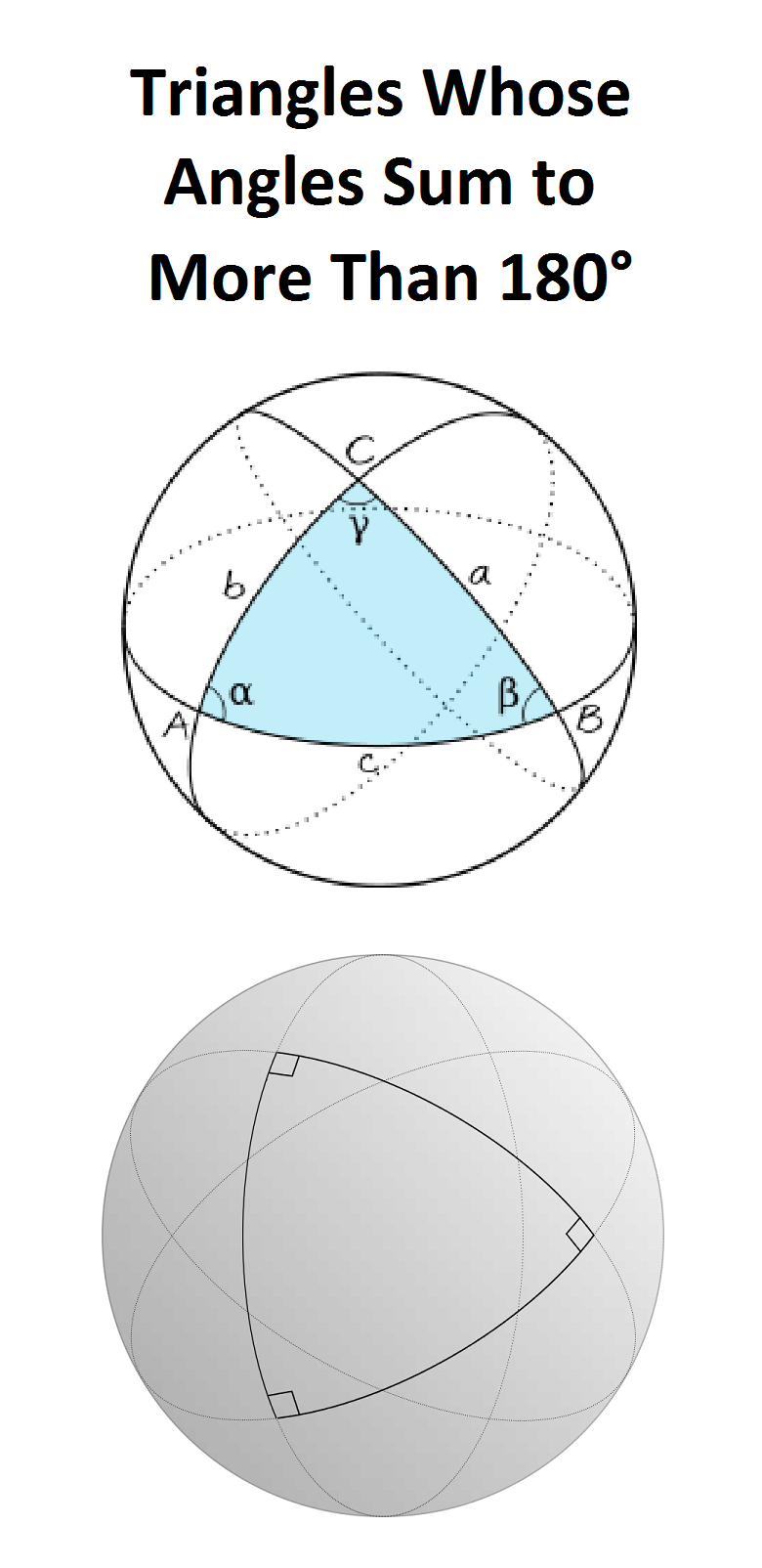
IMPOSSIBLE! Right? You may have heard “the interior angles of a triangle always add up to 180 degrees”. This is not always true. Check out the second image, it shows a triangle with 3 right angles for a total of 270 degrees! 

It is true in flat Euclidean geometry (the geometry you probably learned in school) however. But there are so many other geometries out there! You may be thinking, are other geometries real though? A mathematician would argue they are just as real as the typical flat geometry you know and love (or hate). These alternative geometries can be practically useful too!

The images above show triangles in spherical geometry. Those aren’t triangles though! Oh but they are! A triangle is just a polygon enclosed by three lines. Looks like it fits the criteria. Wait but those aren’t lines, they are curved! Ah yes. I argue that these are, for all intents and purposes, just as good as lines. We need to ask: What is a line? A line is so basic to us we may not know how to describe it. I offer this definition: A line is the shortest path between 2 points. The 3 curves that make the triangle above are in fact the shortest paths from one vertex to the other on the surface of the sphere (they just so happen to be on circumferences of the sphere, which are often referred to as great circles). So it may be more useful to think of lines, in general, as length minimizing curves. In conclusion, we would consider the shape above to be a triangle as it is enclosed by 3 length minimizing curves on a surface.

Spherical geometry can be very useful; think about the Earth. To reduce travel time, airplanes would want to travel along great circles as they are the shortest paths from one place to another. Additionally, this type of thinking (rethinking straight lines as length minimizing curves) is central to Albert Einstein’s general theory of relativity.

read more at http://staffrm.io/@missnorledge/35H6cS1T52
tamikaflynned:

prettyarbitrary:

marikmarik:

infinity-imagined:

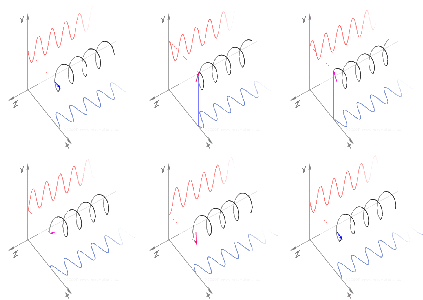
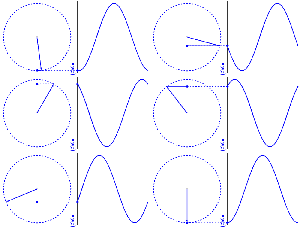
A wave and a circle are both two-dimensional projections of a helix.

What. My… What. My whole life… has been… a… what?

The universe is a gloriously weird thing.  Sometimes I wonder about the shape of humans if you could see us in all four dimensions.

@sting-like-jelly

autisticnarset:

maeamian:

bunyipandler:

kyokoiwase:

wait is 5! = 120 an actual math thing i just reblogged it bc i sincerely believe that yelling a number makes it bigger 

An exclamation point after a number means factorial. Five factorial is 5 times 4 times 3 times 2 times 1. Three factorial is 3 times 2 times 1, etc.

But the more exclamation points after a number, the less big it is, a double factorial is every other number, so 6!! is 6 times 4 times 2, which is less than 6!, So yelling a number makes it bigger, but yelling louder makes it smaller again

it’s because you scared it

visualizingmath:

Mathematical Spirals

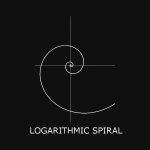
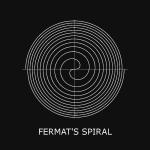
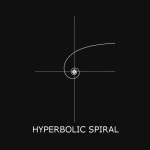
A spiral is a curve which emanates from a central point, getting progressively farther away as it revolves around the point (similar to helices [plural for helix!] which are three-dimensional). Pictured above are some of the most important spirals of mathematics.

Logarithmic Spiral: Equation: r=ae^bθ. Logarithmic spirals are self-similar, basically meaning that the spiral maintains the same shape even as it grows. There are many examples of approximate logarithmic spirals in nature: the spiral arms of galaxies, the shape of nautilus shells, the approach of an insect to a light source, and more. Additionally, the awesome Mandelbrot set features some logarithmic spirals

Fermat’s Spiral: Equation: r= ±θ^(½). This is a type of Archimedean spiral and is also known as the parabolic spiral. Fermat’s spiral plays a role in disk phyllotaxis (the arrangement of leaves in a plant system). 

Archimedean Spiral: Equation: r=a+bθThe Archimedean spiral has the property that the distance between each successive turning of the spiral remains constant. This kind of spiral can have two arms (like in the Fermat’s spiral image), but pictured above is the one-armed version. 

Hyperbolic Spiral: Equation: r=a/θ. It is also know as the reciprocal spiral and is the opposite of an Archimedian spiral. It begins at an infinite distance from the pole in the center (for θ starting from zero r = a/θ starts from infinity), and it winds faster and faster around as it approaches the pole; the distance from any point to the pole, following the curve, is infinite.