oupacademic:

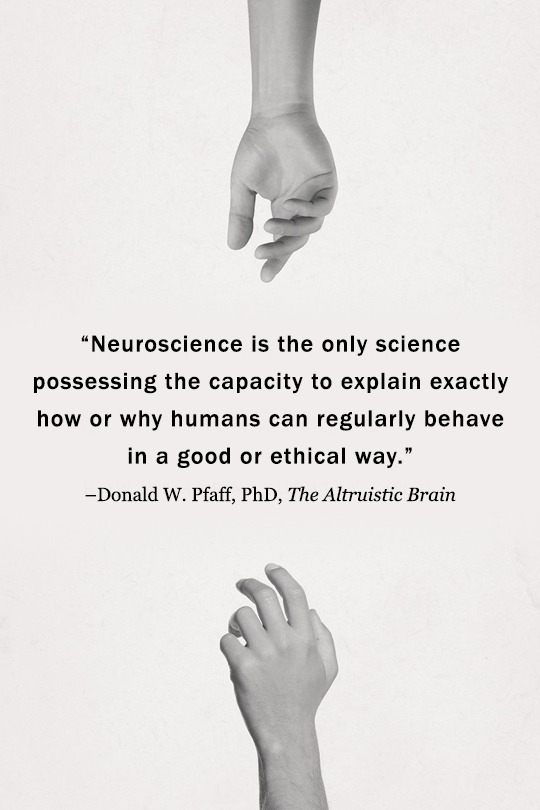
According to Dr. Donald Pfaff, author of

The Altruistic Brain: How We Are Naturally Good, every time we register the need to perform a selfless or benevolent act, our brains undergo a five step process within a few hundredths of a second after our recognition of the need to act. Pfaff argues that this process, referred to as Altruistic Brain Theory (ABT), activates humans’ predisposition to act altruistically.

The 5 steps of ABT:
Step 1: Representation of what the person is about to do
Step 2: Perception of the individual toward whom the benefactor will act
Step 3: Merge images of the victim with one’s own self image
Step 4: Activation of the altruistic brain by feelings that allow the benefactor to assess potential consequences
Step 5: Performance of an altruistic act

A List of Fictional Diseases

thetreeswestofhere:

themedicalchronicles:

This article is a list of fictional diseases — nonexistent, named medical conditions which appear in fiction where they have a major plot or thematic importance. They may be fictional psychological disorders, magical, from mythological or fantasy settings, have evolved naturally, been engineered artificially (most often created as biological weapons), or be any illness that came forth from the (ab)use of technology.

Yay!  Brain Clouds made the list!  It’s what I’ve taken to calling my bad brain days since the weird amnesia/brain tumor news in May.  I have days where forming sentences and thoughts are just tough, spacial awareness is off, the fatigue, oh my god so tired. 

In a weird aside, I’ve been scouring the web for peoples’ stories about recovery from craniotomies.  I can barely find any!  When I was going to have my mastectomy, everyone and their sisters were writing about the experience.  Brain surgery, not so much.  If anyone knows of what recovery is like from a supraorbital keyhole craniotomy or an endoscopic ednonasal approach, let me know.  My doctors aren’t quite going there yet, but it never hurts to do some research.

A List of Fictional Diseases

The first time I called the CDC, I said that I wanted to talk to someone about possibly designing a zombie virus. …So every time I came up with a new iteration of Kellis-Amberlee, I would call back and say, “If I did this, this, this, this, this and this, could I raise the dead?” And every single time they would say, “No.” And I’d say, “OK,” hang up, and go back to working. After about the 17th time, I called and said, “If I did this, this, this, this, this, this and this, could I raise the dead?” And got, “Don’t … don’t do that.” At that point, I knew I had a viable virus.

Seanan McGuire / Mira Grant (via

mmastertheone

)

Ngl I think this is my favorite Seanan anecdote. Like. Of all time.

(via actuallyclintbarton)

I miss those phone calls.

(via seananmcguire)

johnskylar:

pandifreyan:

johnskylar:

pandifreyan:

johnskylar:

ultrafacts:

flowergirlbrandy:

ultrafacts:

freezingspark:

ultrafacts:

Source For more posts like this, follow the Ultrafacts Blog!

Anybody got vids or gifs?

Yeah here ya go! Source: [Video 1] [Video 2]

Behold! Science!!

image

I’d love to know why this happens.

I know smartereveryday did a YouTube video on them that’s quite good if you want more info I suggest watching it. It’s because when the molten glass is dropped into the water the outside cools really fast And The heat gets trapped inside the “bulb” and causes pressure to build. That pressure gives the bulb amazing strength, but the smallest deformation of the surface will cause that pressure to be released and BOOM, no more Rupert’s drop.

Here’s the link to the video.
https://youtu.be/xe-f4gokRBs

Neat.  That explanation makes sense, to a degree–the cooling is so rapid that pressures that would normally be allowed to escape are trapped in the newly solidified outer layer.  Break that layer by damaging the tip and you shift the equilibrium leading to explosive release.

Exactly

If my phd (soon to be) and bs are worth anything, it’s the ability to synthesize coherent hypotheses from half remembered information 🙂

visualizingmath:

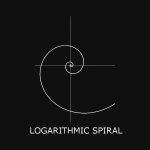
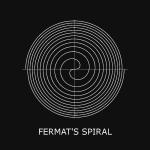
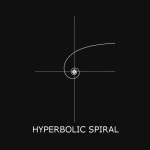
Mathematical Spirals

A spiral is a curve which emanates from a central point, getting progressively farther away as it revolves around the point (similar to helices [plural for helix!] which are three-dimensional). Pictured above are some of the most important spirals of mathematics.

Logarithmic Spiral: Equation: r=ae^bθ. Logarithmic spirals are self-similar, basically meaning that the spiral maintains the same shape even as it grows. There are many examples of approximate logarithmic spirals in nature: the spiral arms of galaxies, the shape of nautilus shells, the approach of an insect to a light source, and more. Additionally, the awesome Mandelbrot set features some logarithmic spirals

Fermat’s Spiral: Equation: r= ±θ^(½). This is a type of Archimedean spiral and is also known as the parabolic spiral. Fermat’s spiral plays a role in disk phyllotaxis (the arrangement of leaves in a plant system). 

Archimedean Spiral: Equation: r=a+bθThe Archimedean spiral has the property that the distance between each successive turning of the spiral remains constant. This kind of spiral can have two arms (like in the Fermat’s spiral image), but pictured above is the one-armed version. 

Hyperbolic Spiral: Equation: r=a/θ. It is also know as the reciprocal spiral and is the opposite of an Archimedian spiral. It begins at an infinite distance from the pole in the center (for θ starting from zero r = a/θ starts from infinity), and it winds faster and faster around as it approaches the pole; the distance from any point to the pole, following the curve, is infinite. 

pepoluan:

nurseanonymous:

scienceknowledge:

txchnologist:

First Aid Advance for Serious Trauma

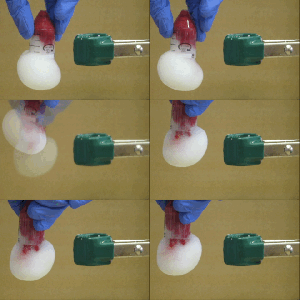
Researchers are reporting a new sprayable foam that can stop major internal or external bleeding without needing to compress the wound, a first-aid advance desperately needed by first responders and trauma surgeons. 

Whether a person suffers a major injury in an auto accident or on the battlefield, one of the leading causes of death is blood loss. The National Trauma Institute says hemorrhage leads to 35 percent of all deaths that occur before an injured patient gets to a hospital. It is responsible for 40 percent of all trauma-related deaths in the first 24 hours. 

Now bioengineers and scientists at the University of Maryland, College Park and Massachusetts General Hospital say they have created a polymer-based foam that causes blood cells to clump together. Learn more below.

Keep reading

If we can create safe temporary biological fillers that interact with hemoglobin and platelets, we can increase the rate of survival for trauma victims by minimizing bleeding before entering the hospital.

This is amazing!

Always Reblog Science for the Betterment of Human Lives!

coelasquid:

cortair:

cactusrabbit:

thejunglenook:

fyeahscienceteachers:

Why an Iron Fish Can Make You Stronger

When Canadian science graduate Christopher Charles visited Cambodia six years ago he discovered that anaemia was a huge public health problem. In developing countries, such as Cambodia, the condition is particularly widespread with almost 50% of women and children suffering from the condition, which is mainly caused by iron deficiency. 

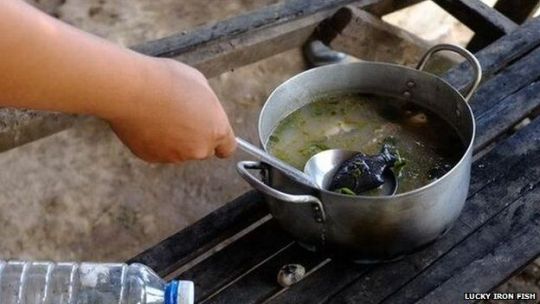
Dr Charles had a novel idea. Inspired by previous research which showed that cooking in cast iron pots increased the iron content of food, he decided to put a lump of iron into the cooking pot, made from melted-down metal.

Boil up water or soup with the iron fish for at least 10 minutes. That enhances the iron which leaches from it. You can then take it out. Now add a little lemon juice which is important for the absorption of the iron.

image

If the iron fish is used every day in the correct way, Dr Charles says it should provide 75% of an adult’s daily recommended intake of iron – and even more of a child’s.

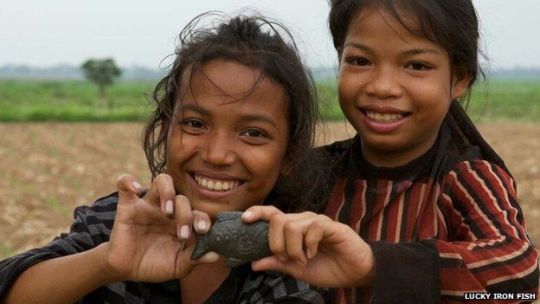
One woman and her daughter, who are part of a current trial in Preah Vihear Province, told the BBC they would use it during cooking.

“I’m happy, the blood test results show that I have the iron deficiency problem, so I hope will be cured and will be healthy soon. I think all the people in Sekeroung village will like the fish, because fish is our everyday food.”

image

-> Read more about Dr. Charles’ research

-> Learn about the effects of anemia

Give this man a Nobel Prize!

For teaching: public health, human anatomy and physiology

Buy a Lucky Iron Fish and one will be donated to the 

Sihanouk Hospital Center of Hope in Cambodia

I am iron poor as hell and this makes me so happy

I need an iron fish.

that’s a cool idea!

pyrrhiccomedy:

moniquill:

accioharo:

blackandyellowdoodles:

justacynicalirishman:

babyshibe:

doctorgaylove:

thecoppercow:

That Mysterious “S” Thing We Used to Draw (by the1janitor)

We used to draw this as kids and it’s always confused me. It still really bothers me tbh.

This is really creepy tbh.

yeah we used to draw these! around 2002. at the time i was told it was like the slipknot logo but now i know it’s totally not. but we did used to get in trouble for drawing them.

we never got in trouble with them. I had them all over my school planner lol. 

(We did call them ‘super S’) 

There’s this awesome book I read called ‘The People in the Playground’ which concerns the observations of an anthropologist on children’s folklore: the stuff that kids independently teach one another in school yards and playgrounds that has no real connection to adult lore and media. This is a great example of it, as are hand clapping and jump rope verses.

If you can finish the lines “Miss Mary Mack Mack Mack all dressed in black black black…” or ‘Hinky Pinky Ponky, Daddy had a donkey…”or “Miss Suzy had a steamboat…” or “Engine Engine number nine…”

stop and think about where you learned them.

It probably wasn’t from an adult or out of a book or in any formal way. It was from another kid; someone a grade ahead of you or someone’s older sibling or something. Who learned it the same way.

This is CHILD lore. Sometimes a fad will come and go in a single age cohort, sometimes it’ll last for generations. It’s kind of awesome.

The idea of child lore and a distinct child culture is really interesting, especially when you consider that children have a few traditions that go back hundreds of years.

For example: did you ever play “Quaker’s meeting?” Quaker’s meeting has begun, no more laughter, no more fun…that dates back two centuries

And of course there’s “Ring around the rosie,” which goes all the way back to the time of the black plague.

Children pass these things down among themselves as part of a legacy they lack the context to fully understand; but you could say the same thing about most adult traditions. That unbroken chain of shared knowledge connects their play to the play of children from hundreds of years ago, without any adult input or encouragement.

That’s cool.