


to-dance-beneath-the-diamond-sky:
to-dance-beneath-the-diamond-sky:
to-dance-beneath-the-diamond-sky:
Did you see the “Pray for Sierra Leone” line anywhere?
#AntiBlackness Is global
😞
I want to donate but I can’t find an org that operates in germany and allows me to give money directly.
The THW doesn’t operate there anymore the drk send a truck with bodybags.
Gonna try unicef if anyone has a better org please share tho I have almost no money.
Here’s an article I found about what’s going on in Sierra Leone right now if anyone’s confused like I was. It’s so horrible: “After the mudslides: Sierra Leone’s body collectors”
I’m going to look into this and how best to help and donate and who to contact as soon as I have access to my computer but for now, my best guess based on general knowledge of humanitarian aid and the UN is to try contacting the Red Cross agencies to see if they are doing anything (and if not prompt them to) also tweet/contact any UN representatives/diplomats for your country to show that there is a significant (international) demand for humanitarian assistance. I’m gonna reblog this again with actual/more info and resources and stuff as soon as I can
Okay I’m going to keep updating as I get/find more info and resources but for now, some basic info:
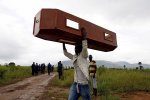
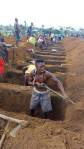
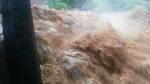
On August 14, a mudslide killed more than 400 people in the mountain town of Regent on the outskirts of Sierra Leone’s capital Freetown, sweeping away homes and leaving residents desperate for news of missing family members.
Here is what we know about it so far: (source)
What happened and when?
- A hillside collapsed on Monday at 6am local time (06:00 GMT), causing a mudslide on the outskirts of Sierra Leone’s capital of Freetown.
- The mudslide occurred after three days of torrential rain.
- The mudslide and rain overwhelmed Freetown’s drainage system, creating waterways that churned down steep streets across the capital.
- Mudslides overran several houses killing hundreds of residents, many of whom were trapped inside their homes.
- Military personnel have been deployed to help rescue those still trapped.
- According to Sierra Leone’s president, an emergency response centre has been established in Regent.
How many casualties?
- The death toll has risen to nearly 500. At least 109 children are among those who have been killed.
- It is estimated that at least 600 people remain missing.
- The morgue at Freetown’s Connaught Hospital has been so overwhelmed by dead bodies that many of them have been left on the floor for lack of space.
Is it safe now? What is the latest on the ground?
- Aid agencies have warned that there is a risk of waterborne diseases such as cholera and typhoid spreading as more flooding is expected.
- A local state of emergency has been declared.
- Satellite images show extensive damage, with hundreds of buildings destroyed.
- About 3,000 people are estimated to be homeless.
- The Red Cross is struggling to excavate families buried deep in the mud that engulfed their homes.
What happened next?
- The government of Sierra Leone promised relief to thousands of people left homeless, opening an emergency response centre in Regent and four registration centres.
- On Wednesday, President Ernest Bai Koroma’s office promised “dignified burials” in the coming days.
- The first of which is expected on Thursday at 3pm local time (15:00 GMT). However, according a local Freetown city council official at least 150 burials took places on Tuesday.
- A week-long mourning was declared.
- The International Organization for Migration released $150,000 in emergency funds.
- The UN said it was evaluating humanitarian needs in the country and that “contingency plans are being put in place to mitigate any potential outbreak of waterborne diseases such as cholera, typhoid and diarrhoea”, according to spokesman Stephane Dujarric.
- Turkey, the UK, Israel and the UAE vowed to send aid, including clean water, medicine and blankets.
So the UN Office for the Coordination of Humanitarian Affairs (OHCA) issued an official update (I’ve bolded the key points):
According to government figures, a total of 493 victims have been buried. The bulk of funerals took place during
the first four days following the landslide. Reports from various sources indicate that hundreds are still missing
but this figure is by no means verified. Substantiated numbers remain scarce since households’ numbers per
demolished unit is uncertain. Excavation of bodies to be discontinued and the area will be demarcated for a
memorial.Rain are continuing as expected at this time of the year but no further flooding or damage has been reported in
the last 5 days. Further assessments to date have not suggested any specific risk of additional landslides.ONS [Office of National Security] list 5905 individuals (1247 households) in five communities as being directly affected by flood or landslide
affected areas, referring to the following categorization:
- Survivors whose homes have been rendered either temporarily or permanently uninhabitable
- Households who have lost income generating member(s)
- Those injured because of disaster
(all categories also include consideration for vulnerable groups)There are three identified holding centres (IDPs sites) [internally displaced persons] in Regent, Kamayama and in town.
The most vulnerable areas are Regent and Kamayama, directly affected by the landslide, other areas mainly
affected by flooding. The Sierra Leone Government has decided to relocate IDPs from Regent to a safer
environment at Old School compound in Hill Valley (about 5km away). School start is delayed by one week to
second week of September due to the emergency. Registration of people in disaster-prone areas needs to
consider long-term planning as well.There are challenges in coordinated reporting from the five Incident Coordination Centres [ICC] set up close to
affected communities, however steps are taken by the Office of National Security [ONS] with support from
UNDAC [United Nations Disaster Assessment and Coordination] and partners to address these. WFP [World Food Program] is supporting the Registration Pillar Lead Ministry of Social Welfare,
Women Gender and Children’s Affairs to digitize beneficiary registration and verify registrants with support from
local community leaders.Response efforts:
Overall the most urgent lifesaving needs are progressively being covered, in particular those related to essential
household items, health and food aid. WASH [Water, Sanitation, and Hygiene] actions to prevent the contamination of water sources and
prevention of epidemics are being undertaken.Efforts should also focus on communities like Culvert who have not yet received some of the essential relief
items. Support to the safe and dignified voluntary relocation of some IDPs to safer zones should also be a priority
and should include the provision of essential services.WFP has seconded a staff full-time to ONS [Office of National Security] Situation Room and UNDAC [United Nations Disaster Assessment and Coordination] has also two teams working hand in hand
with them on the spot in field control centres and at the Situation Room.IOM [International Organization for Migration] has deployed an information management expert to work with ONS on standardising registration and
reporting from field Incident Control Centres (ICC). UK has also deployed two DFID [Department for International Development] staff working with the
Government.UNOPS [United Nations Office for Project Services] is doing mapping, surveys, satellite images and drone powered data as well as engineering advice, in close
collaboration with the ONS [Office of National Security] and the Environmental Protection Agency (EPA). UNOPS handed over of 1,000 solar
lanterns to the ICC’s and impacted households through ONS [Office of National Security] and WFP [World Food Programme]. WFP is providing trucks and light vehicles,
tents and ICT support to the Government’s ICCsHEALTH
The initial emergency phase of care for the wounded (over 200 so far), body recovery and safe and dignified
burials is gradually shifting to a heightened surveillance and infection prevention and control phase. At least
seven cholera kits have been made available by partners and the Government to cover potential needs for at least
two months.Public health risks exist from flooding of wells and latrines, proliferation of mosquitoes as well as water borne
diseases. WHO [World Health Organization] is supporting MoH [Ministry of Health] for increased surveillance preparedness for malaria.
Health pillar working to enhance cholera preparedness, including ongoing surveillance for acute watery diarrhoea.
ONS [Office of National Security] briefings states that there have been a few cases of Diarrhoea but that no testing has come out positive for
cholera.WHO [World Health Organization] and Ministry of Health with support from a Spanish Police team are working closely with forensic team to
do post mortem identification.UNICEF [United Nations International Children’s Emergency Fund] is continuing to provide infection prevention and control materials and essential medicines to the four
main hospitals in Freetown. DFID [Department for International Development] has made available trauma kits to be supplied to emergency health facilities.The need for psychosocial support has to some degree been addressed. ONS [Office of National Security] figures states that roughly 400
(mainly women and children) have received psychosocial support. UN Women has performed orientation on
gender in humanitarian settings as referrals to interim care centres are on-going.FOOD SECURITY
WFP and the Food & Nutrition pillar has completed distributions to about 75 % of identified households in areas
affected by both landslides and flooding.As of 22 August 2017, WFP has reached 1,908 households with food and nutrition support, expanding support to
communities in Juba Bridge and Kanike (200 and 31 households, respectively). WFP also provided fortified
complementary food to children 6-59 months at a shelter in Regent (200 children) and Kaningo (157 children).
Planned food support to morgue and hospital workers is still pending.WFP is working with NGO [non-governmental organizations] and private sector partners to determine complementarity between wet and dry food
distributions at Regent, Kaningo and Kamayama. Welthungerhilfe, World Vision, the Sierra Leone Red Cross
Society and other partners are providing cooking spaces and preparing wet food at shelters. WFP will work with
these partners to support cooking of WFP rations at shelters, as well as preparation of condiments (e.g. leaf stew
that typically accompanies rice).WASH
The Water Resources Unit and partners are currently assessing WASH needs in the affected areas, to be
concluded at the end of the week. UNICEF has supported Ministry of Health and Sanitation to set up a technical
hub for coordination of WASH services at Juba barracks. Hygiene education is continuing at the two centres as
well as in the communities that are within the vicinity of the centres. This will be scaled-up to reach more
members of the community who have been directly affected by the flooding in both Kaningo and Regent
- UNICEF continues to support the provision and delivery of water to the affected communities. In Kaningo,
two 3,000 litre tanks and one 5,000 litre tank were provided. In Pentagon (part of Kamayama), one 6,000
litre bladder was established and 10,000 litres delivered to the existing water tank in Kamayama.- MSF [Doctors Without Borders] has installed 5,000 litres bladder in Regent and Kamayama communities and is currently mapping wels
and sources at risk of contamination- In Regent, UNICEF through it implementing partners, has completed the renovation of existing toilets at the
Saio temporary displacement centre, construction of two mobile latrines and two shower shelters, with
each four rooms (two males and two females). 6,000 litres of water were also delivered.- In Pentagon, 6,000 litres of water were delivered, two mobile latrines, four hand washing stations and two
shower rooms were constructed. Regular solid waste collection and disposal at the Pentagon school,
including placing handwashing stations has also been completed. Construction of a rainwater harvesting
system is now underway- As of 21 August, Street Child of Sierra Leone provided water and emergency Ready-To-Eat packages to 4398
people (1434 women, of which 202 pregnant, 325 lactating; 1922 children). Also 5 water points established
(Regent, Kamayama, Kaningo, Calvert, and Dwarzack registrationg centres). Clothing distributed to 1615
people (478 children, 1137 adults).- Requirement to map at-risk wells and water sources along the river would be useful to support planning for
chlorination to prevent contamination.- The regular supply of water to the two main temporary displacement centres by the Guma Valley Water
Company is continuing.- World Vision SL supported 770 people at Pentagon with WASH intervention.
SHELTER
There is a need to determine number of households needing relocation from both long and short-term
perspectives. Additional need to consult with and consider the needs for host families to identify hosting
modalities. Shelter pillar currently considering duration of hosting as between 3-6 months for planning purposes.Shelter pillar called by the National Commission for Social Action (NaCSA), are producing a policy address shelter
needs, including the issue of people either still living in or considering returning to identified ‘at risk’ areas.The UN in Sierra Leone has contacted UN HABITAT and UNEP [United Nations Environment Programme] in Nairobi to mobilise support for shelter and urban
planning issues as well as a possible environmental impact assessment.EDUCATION/CHILD PROTECTION
The Government has announced that the reopening of schools will be pushed back to 11 September 2017.
Nevertheless, there is an urgent need to relocate those in temporary shelters in time to ensure the readiness of
the schools that are being used as temporary displacement centres and provide supplies to the children that have
been affected by the crisis.SOCIAL MOBILIZATION
The Communication pillar is headed by the Minister of Communication and includes representatives from the UN
Country Team. Information Kiosk are to be set up at the ICC areas to assist in community engagement and better
access to verified information and support community feedback.
There is a distinct need for coordinated messaging addressing risks, diarrhoeal diseases, including cholera and
malaria prevention.
Pledges and Missions
- ECOWAS [Economic Community of West African States ] (including WAHO [West African Health Organization]): $300,000 USD
- Ghana team including Vice-President and NADMO [National Disaster Management Organisation] national coordinator have brought 10MT of relief items
- Togo [Togolese Republic]: $500,000 USD
- China: US$1million to the Government of Sierra Leone through its embassy in Freetown.
- Spain: €60,000 EUR and deployed a technical team to help with body identification
- UK: $5 million USD
- EU: €300,000 EUR for vulnerable families affected by disaster (through local and international partners)
- Ireland: €400,000 EUR for START fund (International NGOs)
- Mercury International: $55,000 USD
- Africell : 67,000 USD
- Red Cross appeal 4.8m USD asked
- Israel announced it will send medicine, clean water, and blankets via the embassy in Senegal.
- Guinea and Nigeria also pledged support.
- Morroco has send 66MT (tents, blankets, cholera kits). Transport by Royal Armed Forces
- Switzerland has pledged $400 000 CHF [Swiss Franc] to IFCR [ Integrated Freight Corp] Appeal (WASH, primary health)
- Qatar is sending cargo
- UK has dispatched a team from the British Geological Survey (BGS) that is assessing the risk of further
landslides in the already-affected zone- Liberia has forwarded 20 vehicles, medical and food supplies.
- Spanish Police Forensic team will be helping on identification of victims etc.
I know this has been super long but we are talking about trying to save human lives so please bear with the long post.
****Okay here’s the really fucking important part (PLEASE READ), how/where to donate:****
UNICEF USA [United Nations International Children’s Emergency Fund ]
Concern Worldwide [international humanitarian organization dedicated to tackling poverty and suffering in the world’s poorest countries]
The International Rescue Committee [global humanitarian aid, relief, and development nongovernmental organization that responds to the world’s worst humanitarian crises and helps people to survive and rebuild their lives ]
Save the Children [international non-governmental organization that promotes children’s rights, provides relief and helps support children in developing countries]
Public Good [donations funded to multiple other active nonprofit relief efforts ]
ActionAid [international non-governmental organization whose primary aim is to work against poverty and injustice worldwide]
Global Giving [501©(3) non-profit organization based in the United States that provides a global crowdfunding platform for grassroots charitable projects]
There are of course other places/sources to donate to, but these are the ones that I know are reputable/legit.

 A Middleground